by medicaltechont | Oct 8, 2016 | eHealth, Privacy
The cash-strapped provincial government wants to cash in on the patient data collected by eHealth Ontario without compromising privacy or privatizing record-keeping.
The cash-strapped provincial government wants to cash in on the patient data collected by eHealth Ontario without compromising privacy or privatizing record-keeping.
With the controversial electronic health agency’s 10-year mandate expiring at the end of 2017, Queen’s Park is looking at what’s next for eHealth.
Health Minister Eric Hoskins on Friday asked Premier Kathleen Wynne’s privatization guru, Ed Clark, for help “in valuing public and private assets with respect to Ontario’s digital health strategy.”
“I would ask you to provide the government with a value assessment of Ontario’s digital health assets and all related intellectual property and infrastructure,” Hoskins wrote in an open letter to Clark.
Read more at https://www.thestar.com/news/queenspark/2016/10/07/liberals-want-to-know-cash-value-of-ehealth.html
by medicaltechont | Oct 1, 2016 | Uncategorized
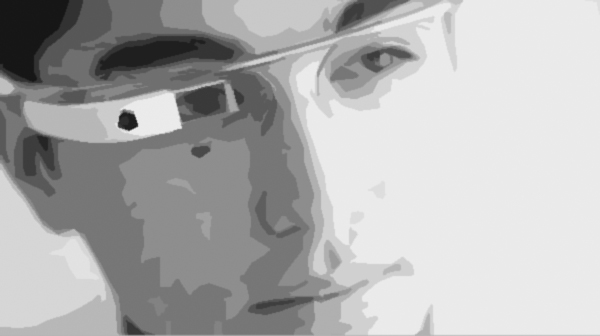
Can you imagine visiting your physician while he or she communicates with a scribe thousands of miles away? Google and Augmedix believe that is the future of medicine, according to The Washington Post.
Augmedix, a San Francisco-based Google Glass startup, uses the pair of glasses and its own medical scribes to enhance the patient-provider relationship.
Approximately 500 physicians in 27 states pay between $1,500 and $4,000 per month to wear Google Glass throughout the day. Attached to the pair of glasses is a small camera, through which a medical scribe can watch an entire appointment and transcribe the patient’s information. If the physician has a patient-related question, the scribe can check the patient’s information and send the physician an answer, which will pop up in the right-hand corner of the glasses.
Click here to read more.

by medicaltechont | Sep 24, 2016 | data, Healthcare, Technology
In it’s basic translation Big data is a term for data sets that are so large or complex that traditional data processing applications are inadequate to deal with them. Challenges include analysis, capture, data curation, search, sharing, storage, transfer, visualization, querying, updating and information privacy. Below is an interesting article on Big Data and Healthcare.
This looming change will be the focus of Big Data: Transforming Patient Care, an evening event at the Big Data Congress taking place in Saint John next month. The event is not only for those attending the congress, but anyone interested in learning how data is revolutionizing healthcare.
The event will feature Jamie Heywood, co-founder and chairman of PatientsLikeMe; Tyler Wish, CEO and co-founder of Sequence Bio, and New Brunswick’s own Erik Scheme, a biomedical engineer and data scientist.
Click here to read more.

by medicaltechont | Jun 18, 2016 | Uncategorized
A recent article in The Commonwealth Fund blog, “Envisioning a Digital Health Advisor,” raises the question of being able to use smartphone apps to get real-time, accurate and personalized guidance for health concerns. While one can envision the convenience, affordability and peace of mind that would result from their use, such services face a number of hurdles before they become reality. As a result, the “digital revolution” has not yet greatly affected most people’s interactions with the health care system.
Read more at http://hitconsultant.net/2016/06/13/34369/

by medicaltechont | Jun 6, 2016 | Uncategorized
New medical technologies are here and ready to be adopted en masse by Canadians, but the marketplace is too fragmented and access too uneven for that to happen right away, said several speakers at an Ottawa forum on seniors.
The spread of new technology like smartphones that are jam-packed with sensors is happening just as the country is being hit with a wave of baby boomers crossing into old age.
Medical experts and industry representatives alike want to see new technologies embraced that would potentially take some pressure off hospitals by allowing people to do more of their health monitoring from home.
With new tech, however, comes new potential concerns, from privacy issues to affordability to ease of access.
Read more at https://www.hilltimes.com/2016/06/03/medical-technology-marketplace-too-fragmented-forum-hears/67450