
How the #Heartbleed bug could affect health care (Breaches have compromised at least 21M patients’ records since 2009)
Thousands of security breaches may be undetectable, experts say
Hospitals and providers’ online networks—including email accounts, electronic health records (EHRs), and remote monitoring devices—may be vulnerable to a destructive “Heartbleed” computer bug, according to security experts.
Breaches have compromised at least 21M patients’ records since 2009
A Google engineer and another security team last week discovered the bug and found that it infiltrates systems through a widely used Web encryption program known as OpenSSL; websites such as Amazon and Google use the program. After a breach, hackers may be able to get sensitive information from email servers, laptops, mobile phones, and security firewalls, experts say.
“[T]his is huge…it’s servers, it’s appliances, it’s devices,” says CynergisTek CEO Mac McMillan, adding that the bug has been around for about two years and experts do not know how many breaches may have already happened. Government agencies and private companies are rushing to fix any vulnerabilities, but breaches may not be detected for a long time, if at all.
“It’s going to be a long, long time before they truly understand the scope of this,” says McMillan.
CEO of CloudFlare Matthew Prince called Heartbleed “the worst bug the Internet has ever seen,” adding “[i]f a week from now we hear criminals spoofed a massive number of accounts of financial institutions, it won’t surprise me.”
At this point, it is also unclear if the nation’s health care providers are especially vulnerable. For example, Web networks that rely on two- or three-factor password authentication should be safe, McMillan says.
But even health groups that do not rely on OpenSSL should be worried about ramifications of the massive breach, according to David Harlow, principal of health care law Harlow Group.
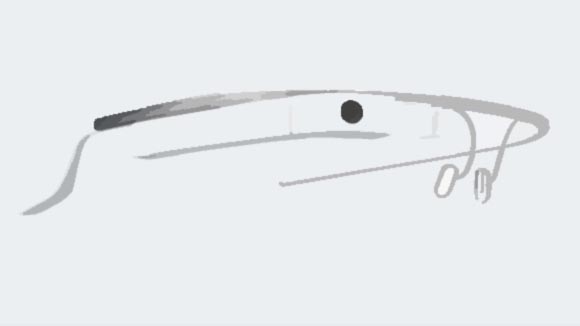
#GoogleGlass may revolutionise medical treatment
Google Glass could revolutionise the way doctors treat diseases and illnesses.
Google Glass could be about to revolutionise the way a range of medical conditions are treated and there are now a number of trials currently taking place across the world. Helping to repair cleft palettes Doctors in Alabama have been collaborating with clinics in El Salvador to train surgeons in repairing cleft palette. Plastic Surgeon Raj Vyas viewed children’s faces through a pair of Google Glasses worn by the trainee, and gave direction by placing his ‘hands’ virtually into the same picture. In February, a team from the University of California introduced an app which allows users perform instant, wireless diagnostic tests for a variety of diseases and health conditions.
Read more at

#Heartbleed bug exposes #OpenSSL project’s meager resources
By Nicole Perlroth
The Heartbleed bug that made news last week drew attention to one of the least understood elements of the Internet: Much of the invisible backbone of websites from Google to Amazon to the FBI built by volunteer programmers in what is known as the open-source community. Heartbleed originated in this community, in which these volunteers, connected over the Internet, work together to build free software, to maintain.
wasWhat makes Heartbleed so dangerous, security experts say, is the so-called OpenSSL code it compromised. That code is just one of many maintained by the open-source community. But it plays a critical role in making our computers and mobile devices safe to use.
“This bug was introduced two years ago, and yet nobody took the time to notice it,” said Steven M. Bellovin, a computer science professor at Columbia University. “Everybody’s job is not anybody’s job.”
Read more at:
http://economictimes.indiatimes.com/articleshow/33958360.cms?utm_source=contentofinterest&utm_medium=text&utm_campaign=cppst
Microsoft SurroundWeb reworks IllumiRoom for immersive web
Microsoft has given its IllumiRoom concept a makeover, with the immersive projected gaming experience evolving to deliver interactive web content that fills the living room and engages with Xbox One, Windows Phone, and Windows. Dubbed Microsoft SurroundWeb, the concept relies on the same approach of using projectors to cast digital graphics onto the surfaces of real-world objects, like the wall surrounding a TV or the coffee table in front of it, which then react to the user within that space.
So, a table surface can be turned into a huge touchscreen controller, expanding the view from a smartphone or tablet, and tracking where the user touches on it. Alternatively, object-recognition can be used to deliver richer metadata.
http://www.appy-geek.com/Web/ArticleWeb.aspx?regionid=3&articleid=21853916
Walk-In Doctor Clinics in Toronto