by medicaltechont | Apr 12, 2014 | Cloud, Healthcare, Software, Technology
 The vast majority of those taking advantage of free, open-source software such as OpenSSL do nothing to contribute to its development—and that’s part of the problem.
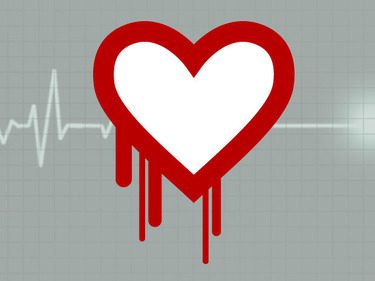
Every day brings new reports of the threats posed by the Heartbleed bug. But the discovery of Heartbleed has also unearthed a scandal that’s plagued the open-source community for years. The scandal is that giant enterprises are doing nothing to contribute to the development, testing and validation of the free software on which they depend. They are takers, pure and simple. Nothing makes this more obvious than the details revealed by the German developer who was responsible for the bug in the first place, Dr. Robin Seggelmann. Dr. Seggelmann, it appears, was spending his end-of-the-year holiday working to fix bugs in the first version of OpenSSL, the encryption software that was becoming a standard on the Internet. While he was at it, Seggelmann developed a way to create a heartbeat function that could keep encrypted sessions open rather than timing out over time.
Read more at http://www.eweek.com/security/heartbleed-openssl-bug-reveals-the-true-cost-of-open-source-software.html
by medicaltechont | Apr 9, 2014 | Cloud, e-Health, EHR, Healthcare
New Brunswick has moved “from almost the worst in the country to near the front of the pack” for electronic medical record adoption, says the president of the New Brunswick Medical Society.
Dr. Lynn Hansen says 357 doctors out of the eligible 950 enrolled in the provincial program by this week’s deadline for federal funds.
Hundreds of thousands of New Brunswick patients will soon have digitized records, improving the efficiency and productivity of physician offices, she said in a statement on Thursday.
The e-record program will save the health care system money through better referral processes, fewer missed appointments and faster access to test results, said Hansen.
Read more.
by medicaltechont | Apr 6, 2014 | Canada, Cloud, eHealth, Privacy, United States
When it comes to electronic health records, “the switch to cloud is inevitable.” That’s according to Joy Pritts, Chief Privacy Officer at the Office of the National Coordinator for Health IT in the Obama administration, who spoke at a “Health Care, the Cloud, and Privacy” panel hosted by the Washington, D.C.-based advocacy group, Patient Privacy Rights.
Electronic health records are exactly what they sound like: A collection of health information in digital format that can include a wide range of data, from intimate details of your medical history and test results to demographic data to your billing information. Digital records are superior to physical ones because they can be transferred quickly when patients switch providers, help doctors get a complete picture of patient health, eliminate the need for redundant testing, and provide new opportunities for analyzing treatments for efficiency and effectiveness.
Read more.

by medicaltechont | Mar 20, 2014 | Canada, Cloud, Hardware, Technology, The Internet
If you think you don’t have data security issues, you’re probably wrong. In a survey by the Ponemon Institute, 94 percent of health care organizations reported a data breach in the past two years. The firm pegged the cost of such breaches in the U.S. at close to $200 per record.
That would amount to no small drain on the system. Breaches involving more than 29 million patient health records have been reported to the U.S. Secretary of Health and Human Services since 2009, according to a February 2014 study by IT security firm Redspin.
And there’s no sign that the risk will subside anytime soon. Quite the opposite, in fact. Experian wrote in a recent report: “Healthcare, by far, will be the most susceptible to publicly disclosed and widely scrutinized data breaches in 2014.” That’s in part because as the industry grows, so does its “attack surface.” Understandably, health care professionals prefer to focus on looking after their patients. But organizations that encourage every team member to think a bit more like an IT security analyst stand the best chance of avoiding data breaches and other IT problems.
See more at: http://medcitynews.com/2014/03/6-health-risks-cant-afford-ignore/

by medicaltechont | Mar 16, 2014 | Cloud, e-Health, EHR, Healthcare, Technology
N.B. Medical Society facing criticism from members about patient record software. The New Brunswick Medical Society is finding itself on the defensive against criticism from its own members who are questioning its handling of a new electronic medical record (EMR) program. Launched in partnership with the private information technology company Accreon, the software is sold under the business name Velante.
Only 240 of 950 eligible doctors have signed up for Velante, one month ahead of the March 31 deadline to receive government subsidies.
But, according to Health Minister Ted Flemming, only 34 doctors are currently using it.
‘We feel we’ve been pushed aside.’
– Dr. Sarah Charlebois
Many doctors, such as Dr. Sarah Charlebois, an Oromocto family physician, are using other systems.
Read more

by medicaltechont | Jan 2, 2014 | Cloud, e-Health, eHealth, Ontario, Privacy, Technology
We are using the cloud more and more. As Internet connections get faster and more reliable, the convenience of having all our data available on all our devices becomes ever more attractive.
However, there are disadvantages to using cloud services, particularly the free of charge ones that still have to make a profit somehow. There are many valid, albeit scary, questions you’ll want to mull over before trusting a third party to keep your data safe and we’ve listed them below.
The answers, as you will discover, in this feature are generally not what you want to hear:
- Privacy – is your data stored or is it being mined for advertising and marketing purposes?
- Reliability – can you be certain that the service you’re using will always be available? What guarantees do you have regarding the safety of your data and is there anything you can do to improve this?
- Security – is your data encrypted? Who has access to the encryption keys? Could your data be hacked or stolen?
- Continuity – Can the cloud provider suspend or cancel your account, possibly even losing all your data, for any reason?
- Performance – Is your Internet connection fast enough to use the services you want without delays?
- Copyright – who owns the content you upload? Can your photos be sold or published without your consent?
Read more