by medicaltechont | Oct 27, 2012 | lasers, Technology
DERMATOLOGISTS are good at spotting unusual bits of skin that might or might not be cancers. Testing whether they actually are, though, is quite literally a bloody pain. For a piece of skin to be identified as malignant or benign it must be cut out and sent to a laboratory for examination under a microscope. But a team of researchers led by Rainer Leitgeb, a physicist at the Medical University of Vienna, hope to change that. As they describe in Biomedical Optics Express, Dr Leitgeb and his colleagues are exploring a technique called optical coherence tomography (OCT), which they think will allow skin cancer to be diagnosed in situ.
OCT is a form of optical echolocation. It works by sending infra-red light into tissues and analysing what bounces back. The behaviour of the reflected rays yields information on the structures that they collided with. That, Dr Leitgeb hoped, could be used to generate a map of features just beneath the surface of the skin. Similar technology has been employed for nearly two decades by eye doctors and Dr Leitgeb felt that, with a bit of tinkering, it should work for skin as well.
Read more
by medicaltechont | Oct 10, 2012 | e-Health, eHealth, Healthcare, Hospitals, Ontario, Technology
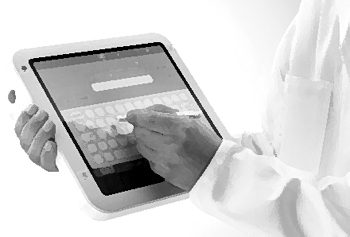
The case for electronic medical records is compelling: They can make health care more efficient and less expensive, and improve the quality of care by making patients’ medical history easily accessible to all who treat them.
Small wonder that the idea has been promoted by the Obama administration, with strong bipartisan and industry support. The government has given $6.5 billion in incentives, and hospitals and doctors have spent billions more.
But as health care providers adopt electronic records, the challenges have proved daunting, with a potential for mix-ups and confusion that can be frustrating, costly and even dangerous.
Some doctors complain that the electronic systems are clunky and time-consuming, designed more for bureaucrats than physicians. Last month, for example, the public health system in Contra Costa County in California slowed to a crawl under a new information-technology system.
Read more
by medicaltechont | Sep 22, 2012 | Canada, e-Health, emr, Software, Technology
TORONTO – The Ontario government has spent nine years and billions of dollars trying to make its troubled eHealth program work.
And despite repeated assurances from the government, that progress is being made, many doctors still struggle to get timely access to basic medical records and patients continue to face needless risks and treatment delays the program has failed to deliver what the public was promised – efficient access to electronic health records.
One Burlington family doctor became so frustrated, he hired college students to see if they could help him fix the electronic mess the government left in his office.
They did.
He was able to easily and inexpensively turn unfriendly electronic patient information programs into a helpful tool he can actually use when sitting in front of a patient.
But Dr. John Holmes said that while one eHealth Ontario official showed up at his office to see what he’d done, the organization clearly wasn’t interested in learning from his experience.
As a frontline health care provider and as a taxpayer, that indifference doesn’t sit well with Holmes.
Read more
by medicaltechont | Apr 27, 2012 | eHealth, Ontario
A Toronto conference on health informatics hears experts tout the use of information technology to improve patient outcomes
Enterprises aren’t the only organizations that suffer from silos of data. So does the medical community, a Toronto health informatics conference has been told.
Dr. Bruce Friedman, professor emeritus of pathology at the University of Michigan medical school, said that for too long pathologists– who look at patient tissues through microscopes, and radiologists – who look at x-rays – have operated as separate, sometimes undigitized disciplines.
Their reports go separately to clinicians, who have to make a diagnosis.
But, Friedman said, it’s time, to bring the disciplines together through information technology to create a single “super diagnosis” to make it easier for doctors.
His speech on Thursday at the opening of the two-day Advances in Health Informatics Conference was one of a number of presentations by doctors and researchers on how IT can improve patient outcomes.
The conference led off with former Canadian astronaut Dr. Dave Williams, now chief executive officer and assistant professor of surgery at Ontario’s Southlake Regional Health Centre, saying health informatics “is truly the disruptive, revolutionary change that will change the way we deliver health care.”
Read more
by medicaltechont | Mar 30, 2012 | eHealth, Ontario MD, Technology
First, good news for the health-care IT industry: EMR is growing. Whether its incentives or the bottom line, or a desire for better care, EMR is growing by available metrics of usage and sales of software/services. More physicians use it. Its revenue growth of over 14% would be terrific growth for any product or service of course, but may not be growing in usage as fast as government planners or health-care corporations may have anticipated.
Read more