by medicaltechont | Feb 7, 2015 | Canada, Healthcare, Hospitals, private clinics
The Supreme Court of Canada decision Friday to allow people with “grievous and irremediable medical conditions” to ask for doctor-assisted suicide should be just the start of a national conversation about end-of-life care in the country, doctors say.
“The Supreme Court has lit a fire under us,” Dr. James Downar, Co-Chair of the Physicians Advisory Council for Dying with Dignity, said in an interview.
“It’s time to talk, we can’t put it off any more.”
http://www.cbc.ca/m/news/health/doctor-assisted-death-physicians-want-more-palliative-care-as-well-1.2948265

by medicaltechont | Dec 18, 2014 | Canada, e-Health, eHealth, EHR, Healthcare, Privacy, Security
Ontario’s privacy commissioner has found the Rouge Valley Health System failed to protect patient health information following a review of two separate privacy breaches, which may have affected patients at both Centenary and Ajax-Pickering hospitals.
http://m.durhamregion.com/news-story/5211578-privacy-breaches-at-rouge-valley-hospital-may-have-affected-ajax-pickering-patients/

by medicaltechont | May 10, 2014 | Healthcare, Toronto
Here’s my simple plan for getting doctors’ bills under control. Patients should get annual statements from OHIP.
That’s right.
What other service do you pay for but don’t ever see the bill? We go to our doctor. They bill OHIP. We have no idea how much they’ve billed on our behalf. Oh, I’m sure 99% of doctors are legitimately billing patients for services they’ve delivered. But it’s that 1% that niggles. Patients never get to see the what doctors are billing. Not only that, we’ve no idea how much we’re paying for hospital services or trips to walk-in clinics. We don’t value something when we don’t know how much it costs.
And how do we know we’re getting good value for our dollars when we don’t even know the cost of the service?
Read more.
by medicaltechont | Apr 12, 2014 | Cloud, Healthcare, Software, Technology
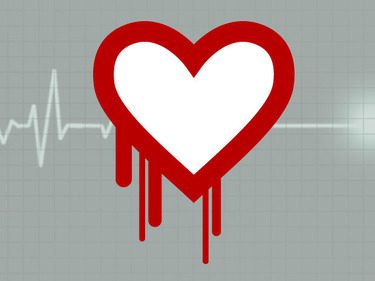
 The vast majority of those taking advantage of free, open-source software such as OpenSSL do nothing to contribute to its development—and that’s part of the problem.
Every day brings new reports of the threats posed by the Heartbleed bug. But the discovery of Heartbleed has also unearthed a scandal that’s plagued the open-source community for years. The scandal is that giant enterprises are doing nothing to contribute to the development, testing and validation of the free software on which they depend. They are takers, pure and simple. Nothing makes this more obvious than the details revealed by the German developer who was responsible for the bug in the first place, Dr. Robin Seggelmann. Dr. Seggelmann, it appears, was spending his end-of-the-year holiday working to fix bugs in the first version of OpenSSL, the encryption software that was becoming a standard on the Internet. While he was at it, Seggelmann developed a way to create a heartbeat function that could keep encrypted sessions open rather than timing out over time.
Read more at http://www.eweek.com/security/heartbleed-openssl-bug-reveals-the-true-cost-of-open-source-software.html
by medicaltechont | Apr 9, 2014 | Cloud, e-Health, EHR, Healthcare
New Brunswick has moved “from almost the worst in the country to near the front of the pack” for electronic medical record adoption, says the president of the New Brunswick Medical Society.
Dr. Lynn Hansen says 357 doctors out of the eligible 950 enrolled in the provincial program by this week’s deadline for federal funds.
Hundreds of thousands of New Brunswick patients will soon have digitized records, improving the efficiency and productivity of physician offices, she said in a statement on Thursday.
The e-record program will save the health care system money through better referral processes, fewer missed appointments and faster access to test results, said Hansen.
Read more.

by medicaltechont | Mar 18, 2014 | Education, Healthcare, Hospitals
THE WOODLANDS, Texas–On March 13th, middle school students at The John Cooper School had a rare opportunity to learn about, and even operate, the da Vinci® Surgical System, a robot that assists surgeons in minimally invasive surgery.
Introduced in 1999 by Intuitive Surgical, the da Vinci® Surgical System is now the global leader in the emerging field of robotic-assisted minimally invasive surgery. Since the beginning, the company has consistently provided surgeons and hospitals with the tools needed to help patients return to their productive lives.
What makes this system really unique is that the surgeon does not operate over the patient, rather in a separate component known as the surgeon counsel. From there, the surgeon has full control of the robot by using finger stirrups that then move the robot’s four arms. Three of the arms hold instruments for the surgery. The fourth arm holds the camera, which allows the surgeon to see a 3D image. Brian Kiscoe, the Area Sales Manager for Intuitive Surgical, explains that the da Vinci mimics open surgery.
“Theoretically, you’ve got your left hand, your right hand, and your eyes,” said Kiscoe. “It is as if you were operating over the patient.”
Read more