by medicaltechont | Mar 17, 2014 | Healthcare, Ontario, The Internet
Since they came into the world, baby boomers have been changing it. The U.S. Census Bureau defines a baby boomer as someone born between 1946 and 1964 — that makes them 75 million strong. Now that they are reaching retirement age at the rate of three million per year, baby boomers are poised to change the face of healthcare with technological advances that meet their demand for smart, savvy and easy solutions to cope with the issues of aging.
Baby boomers are definitely embracing new technologies. According to a 2012 study by Pew Internet Research, 80 percent of baby boomers use the Internet, and 46 percent use a smartphone and are familiar with downloading apps. Up to 84 percent of them are using that Internet access to search for information on healthcare. As baby boomers age and face more health issues, including the treatment of chronic diseases, technology will be forced to grow and change faster than ever to keep pace.
Read more

by medicaltechont | Mar 16, 2014 | Cloud, e-Health, EHR, Healthcare, Technology
N.B. Medical Society facing criticism from members about patient record software. The New Brunswick Medical Society is finding itself on the defensive against criticism from its own members who are questioning its handling of a new electronic medical record (EMR) program. Launched in partnership with the private information technology company Accreon, the software is sold under the business name Velante.
Only 240 of 950 eligible doctors have signed up for Velante, one month ahead of the March 31 deadline to receive government subsidies.
But, according to Health Minister Ted Flemming, only 34 doctors are currently using it.
‘We feel we’ve been pushed aside.’
– Dr. Sarah Charlebois
Many doctors, such as Dr. Sarah Charlebois, an Oromocto family physician, are using other systems.
Read more

by medicaltechont | Mar 15, 2014 | Healthcare, Physiotherapy
CORNWALL – The Ontario government has made it a little easier for patients looking for physiotherapy to receive the help they need without having to deal with private insurance companies. OHIP announced patients will now have access to OHIP funded physiotherapy services in 24 pt Health physiotherapy clinics across Ontario.
Cornwall Physiotherapy on South Branch Road has always been an OHIP funded clinic and clinic director Amanda Peltsch said it was changes to the way OHIP funded physiotherapy services that made the impact.
“With the changes that happened in August, other clinics were able to apply for contracts to provide OHIP services,” said Peltsch, “We were already one of the original OHIP providers, so we automatically were granted a contract. We are allocated a certain amount of episodes of care to apply to OHIP clients.”
Peltsch said now any physiotherapy clinic in Ontario can apply for the OHIP contracts.
“That’s why we are seeing more OHIP providers,” she said.
Read more

by medicaltechont | Nov 12, 2012 | Canada, e-Health, eHealth, emr, Healthcare, Ontario, Ontario MD
After Helmut Braun’s wife died, he turned to the Internet to find someone else to play cards with. Before long, like so many Canadian seniors these days, he’d become something of a keyboard wizard. But when Braun had a heart attack last November, the 85-year-old former barber figured he’d played his last online ace. As he lay in frightening pain in an ambulance, the last thing he could have guessed was that he would soon become a cyber-pioneer. But that’s what happened in the long-term palliative care ward at Baycrest Health Sciences Centre in north Toronto.
Read more
by medicaltechont | Oct 10, 2012 | e-Health, eHealth, Healthcare, Hospitals, Ontario, Technology
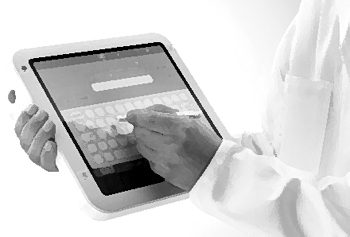
The case for electronic medical records is compelling: They can make health care more efficient and less expensive, and improve the quality of care by making patients’ medical history easily accessible to all who treat them.
Small wonder that the idea has been promoted by the Obama administration, with strong bipartisan and industry support. The government has given $6.5 billion in incentives, and hospitals and doctors have spent billions more.
But as health care providers adopt electronic records, the challenges have proved daunting, with a potential for mix-ups and confusion that can be frustrating, costly and even dangerous.
Some doctors complain that the electronic systems are clunky and time-consuming, designed more for bureaucrats than physicians. Last month, for example, the public health system in Contra Costa County in California slowed to a crawl under a new information-technology system.
Read more
by medicaltechont | Sep 22, 2011 | Citrix, Healthcare, Hospitals
The Blackberry Playbook has been much maligned in the news as of late. Problems including no native email application and a barely populated app store have overshadowed many of the good features of the tablet device.
“With the Citrix Receiver, users can access virtual desktops on servers running Microsoft Windows, as well as an organization’s enterprise apps, enabling standalone app virtualization. This is huge for industries such as healthcare that rely on Citrix virtualized systems.”
Read More